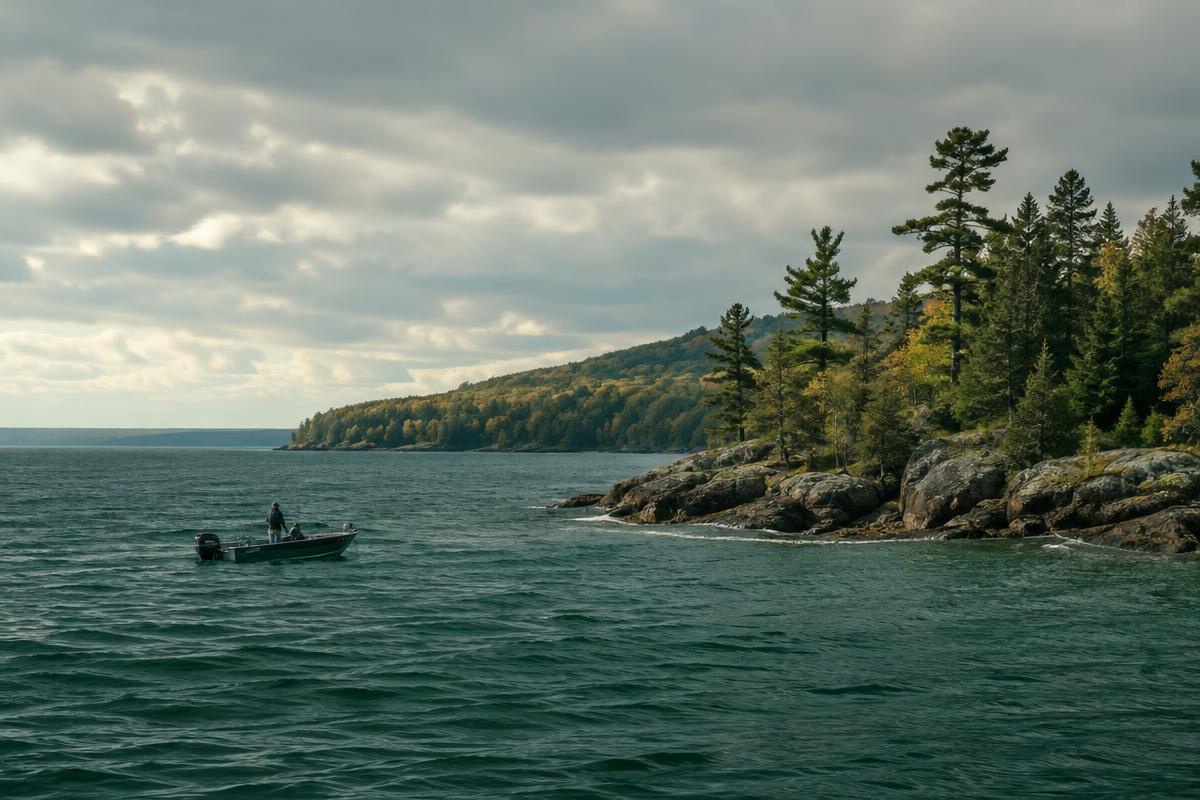
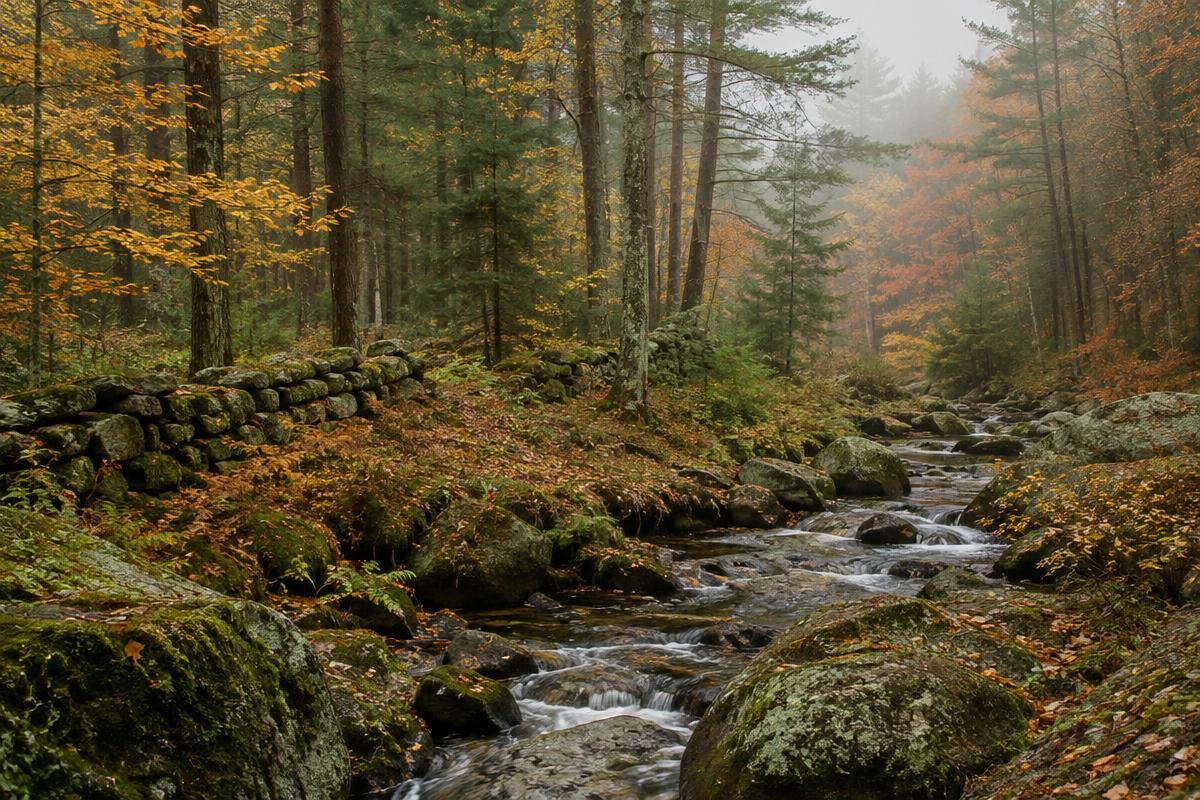
The Northeast is a landscape of small water and long history. Timberdoodle covers, brook trout brooks, and a coastline with strong tidal fisheries make it dense with opportunity, if not with solitude.
Landscape & Country
Glacially scoured hills and shallow soils produce thousands of small streams and ponds. Many brooks hold native brook trout in water small enough to step across.
The coast runs from the rocky shores of Maine to the estuaries of the Mid-Atlantic, with tidal rivers that fish well on moving water.
Fishing Waters Worth Knowing
These entries describe the character of each water. Licensing, seasons, and bag limits are set by the managing state agency and change annually.
Lake Champlain
New York & VermontA large, cold lake with a diverse fishery including lake trout, landlocked salmon, bass, and northern pike.
Chesapeake Bay
Maryland & VirginiaThe largest estuary in the United States, with shallow grass flats, channel edges, and strong tidal influence on feeding patterns.
Catskill rivers
New YorkTailwater and freestone streams with a long fly-fishing tradition. Access is a mix of public land and private agreements.
Maine brook trout ponds
MaineRemote ponds holding native brook trout, often reached by logging roads and short carries. Check state rules for each water.
Wildlife
- White-tailed deer
- Black bear in northern forests
- Moose in northern New England
- Ruffed grouse and woodcock
- Black duck and other coastal waterfowl
Public Recreation Areas
- State forests and wildlife management areas
- National forests in the Appalachian spine
- National wildlife refuges along the coast
- Wildlife management areas with permit-based access
Conservation Priorities
Brook trout conservation is the signature issue: cold water, connected streams, and intact forest shade. Coastal work focuses on water quality and submerged aquatic vegetation, both of which drive the health of estuarine fisheries.
Official State Wildlife Resources
Licenses, season dates, bag limits, and access rules are set by each state. These are the agencies responsible for the states in this region.
Connecticut
Connecticut Department of Energy and Environmental Protection
Delaware
Delaware Division of Fish and Wildlife
Maine
Maine Department of Inland Fisheries and Wildlife
Maryland
Maryland Department of Natural Resources
Massachusetts
Massachusetts Division of Fisheries and Wildlife
New Hampshire
New Hampshire Fish and Game Department
New Jersey
New Jersey Division of Fish and Wildlife
New York
New York State Department of Environmental Conservation
Pennsylvania
Pennsylvania Game Commission
Rhode Island
Rhode Island Department of Environmental Management
Vermont
Vermont Fish and Wildlife Department
Virginia
Virginia Department of Wildlife Resources
West Virginia
West Virginia Division of Natural Resources
Confirm current requirements directly with each agency before traveling. Regulations differ by water and by unit within a state.