Recognizing Wild Turkey Habitat Across the U.S.
A practical field note on reading cover, food, water, and seasonal changes without disturbing the birds or overlooking signs of habitat stress.
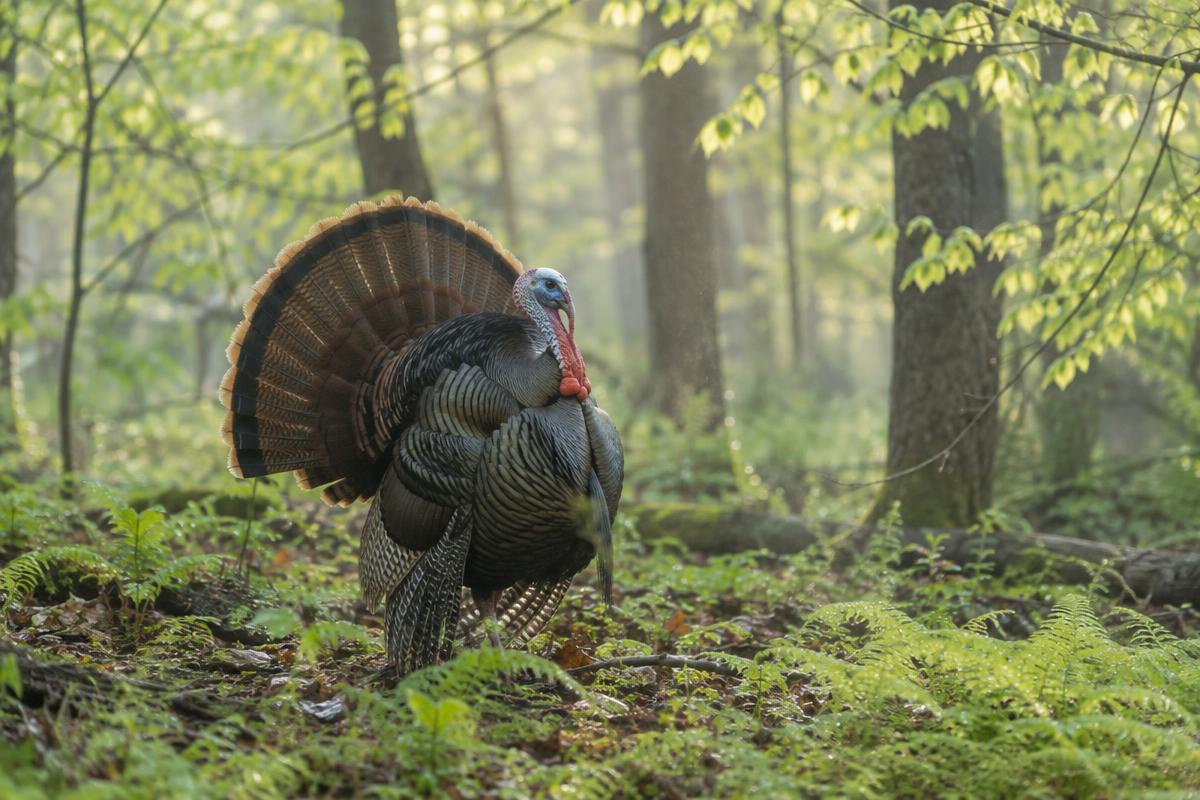
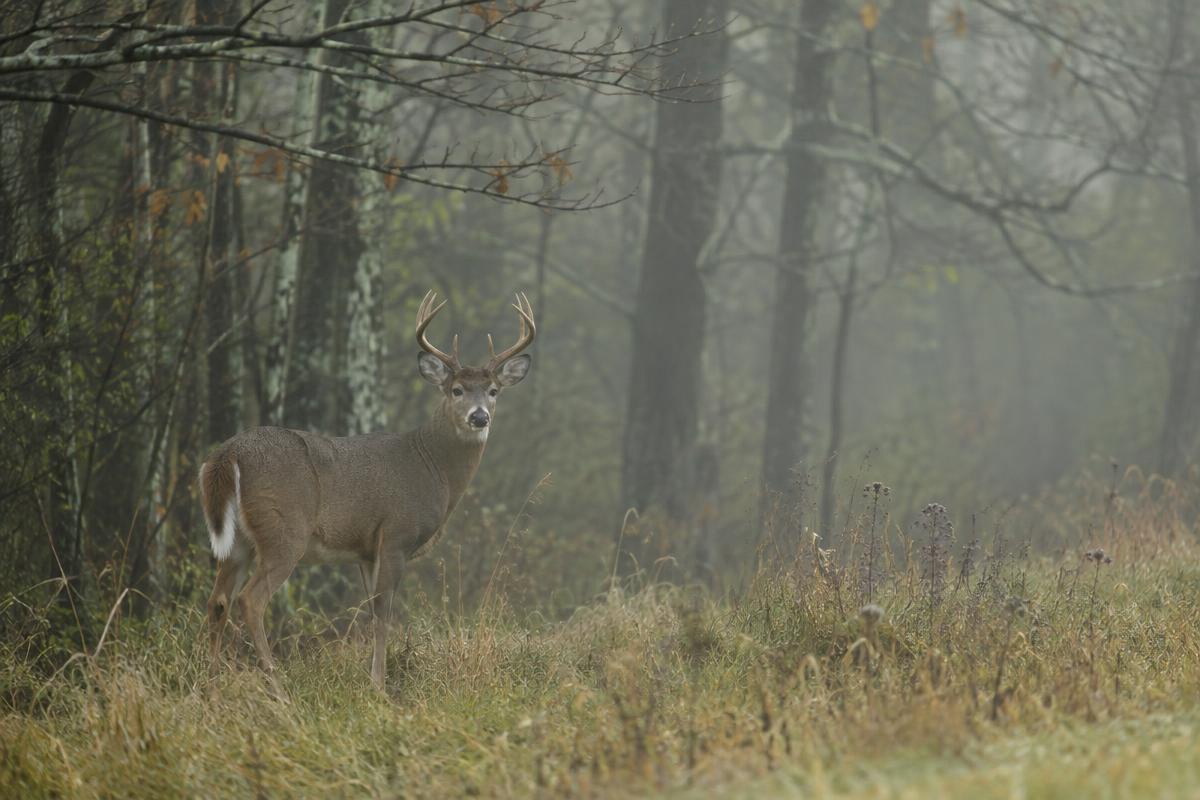
Wild turkey gobbler in a dewy spring hardwood clearing
Follow the Habitat Mix
Wild turkey habitat is best viewed as a collection of resources or features all found within a larger land base. Look for mature trees, younger trees of various ages, open ground, food producing plants and reliable sources of water within the same general area.
Sites along creek bottoms, field edges, woodland openings, brushy slopes, and forest gaps are typically of greatest value. Sites have different values at different times of the year and in different regions. For example, a site of moderate value in the winter may be of high value in the spring. A site of low value during high ground cover may be of high value in late winter or early spring. Sites are typically of greatest value when a combination of resources are available within the larger landscape.
Regional patterns differ:
These are general patterns for the different regions and do not mean that there are birds there.
- Eastern forests: Habitat for wild turkey in Eastern forests is composed of mixed hardwoods and forest openings in addition to trees that produce mast for wildlife.
- Southeastern landscapes: In southeastern states, mixures of pine stands, wetland edges and open areas that have been managed for wildlife are a common combination of habitats to find wild turkey.
- Plains and Western areas: Areas with Shelterbelts, cottonwood groves in stream bottom areas, open grasslands and agricultural fields with appropriate cover and food can provide suitable turkey habitat.
Watch How Flocks Use the Seasons
Their use of specific landscapes can vary by season. Thus an area with little vegetation in late fall can be easily observed for sign of turkey activity (such as tracks) whereas in summer with full foliage it can be difficult to observe any evidence of turkey use. Later in the year, particular areas with lots of mast, seeds, berries, etc. can become favorite places along edges of cover where left over crops exist.
As for how birds use their environment during different parts of the year, flocks generally can gather near reliable sources of food during winter. Such birds will concentrate in areas where there is food to eat and access to reliable sources of water.
Looking at how flocks use a location in the seasons can help distinguish habitat features from occasional use of a location by the flock. While in seasons with sparse vegetation, feeding areas, and associated sign can be clearly seen, in summer, habitat features may be concealed by overgrowth of vegetation. Later in the year, when much of the mast has been eaten, seeds, berries and even leftover crops can attract the flock to edges of fields and patches of cover.
Interpret Ground Signs in Context
Tracks and signs of wild turkeys can include freshly opened up soil, scattered feathers, droppings, tracks, scratch marks in the soil and worn paths through vegetation. But remember that all of these signs can be made by other animals including farm animals, small mammals, other birds and even rain. Old signs of turkeys have a tendency to stick around for a very long time after the actual bird has left the area.
Consider the surroundings of any sign. For example, a single scratch beside a stand of trees producing mast for wildlife is of greater value than a bare patch in the middle of an open field. Turkey tracks near a source of water are of greater value than those found on a simple trail. Make note of the location, the sign’s condition, and the amount of cover near the sign, and then move on. Do not disturb the area, remove plants, turn over logs, etc. to look for more signs. Rather, continue to move forward in the observer’s path.
Look for Stress as Well as Suitability
Habitat problems can be developing over many years. The understory becoming too dense, a seasonal seep drying up early in the season, invasive species replacing desired wildlife food, and erosion of a corridor or travel route can all negatively impact habitat by reducing the range of conditions that are desired by wildlife. Too little cover and too much cover can both negatively impact use of a site by animals.
The effects of human activity on wildlife can take some time to develop but can impact the range of conditions that wildlife are able to utilize. Compare several locations in the vicinity and record any significant damage to habitat or wildlife. Note whether the damage is within a land management unit and report through appropriate channels to the land manager.
Make Observation the Least Disruptive Activity
Public lands can cover long distances, feature rough terrain, muddy paths and extreme temperatures in a matter of minutes. Be prepared for your wildlife viewing excursion by bringing layers, sturdy footwear, water, a fully-charged phone, a small first aid kit, and a map or your offline navigation aid of choice.
Remember to be particularly quiet at dawn and dusk when a lot of animals are moving about and settle down for the night. If a flock suddenly changes direction, appears to be startled, or keeps returning to a place after you have approached, then retreat and go a distance away. The notes on habitat, weather, bird numbers, and behavior will probably be more useful than having observed the birds up close.
A note on regulations
Fishing and hunting rules are set by state and federal agencies and change annually. This article describes general outdoor practice, not current law. Confirm licenses, seasons, limits, and access with the managing agency before you go.