How to Check Whether You Can Cross Public Ground
A public destination does not always mean a public route. Learn how to read ownership, easements, signs, and official maps before crossing toward a hunting or fishing spot.
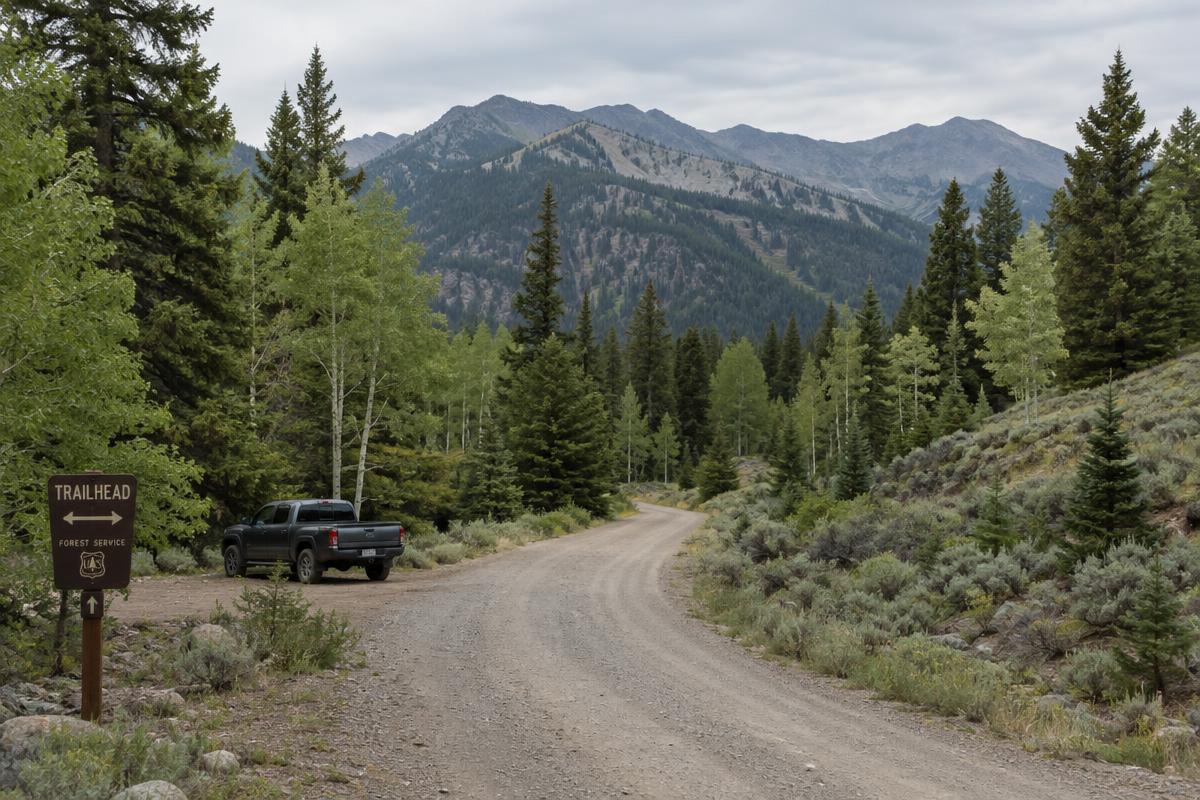
A forest service road winding through mixed forest toward distant mountains
Getting started
Just because a parcel on a map is public does not mean that a route to a place where you want to go hunting or fishing will exist. For example, a county road on a map may end at private property, a thin strip of land between two public parcels, or a recorded easement for access to the parcel. Hunter Sam looks at a printed map of the area before heading off to a wetland. Will his route go through private property?
Start with the route, not the destination
Sam’s map of the wildlife area shows a patch of timber in the middle that is shaded a different color than the surrounding land. Even though the end of the route to the wetland is public, the most direct path to the hunting or fishing location is over privately owned land. Even though Sam hunts and fishes on public land, the land leading up to the public shorelines, fields or trails may be privately owned.
Outline the entire route that you will take from a public road, parking area or other established public access to your destination and then check for gaps. Although a route that goes around several parcels of privately held land to end up on public ground may be longer than you had anticipated, understanding the entire route in advance will lead to a more enjoyable hunting trip.
Separate ownership from permission to pass
Who owns the land is a different question from who can use it for access. An easement, for example, is an interest in land that allows the holder of the easement to use the property for a specific purpose. They may cross private property to get to public land for example, and the property may still be privately owned. An easement can also be limited to specific locations, be restricted to certain uses, and require maintenance by the holder of the easement.
A map, by itself, is not enough. A simple printed map does not make for a good hunting or fishing trip. There are many things that can affect a trip to a wildlife area and many of these things can be researched before you leave home. It’s also a good idea to bring a paper copy of the map and save it to your phone as well. Having all of this information can make for a very safe and enjoyable trip.
Read signs as field evidence
As Sam approaches the property line, he sees a metal boundary sign near a locked gate to the private property. There is another sign farther down the fence line. Signs such as these are evidence of a property boundary and a route that should be scrutinized before heading out. A locked gate is a reason to turn back and check with the agency. A sign that restricts a particular activity may have a different meaning from a closure notice.
Boundaries are often not visible in tall grass, brush, or even in heavy snow. Be aware of what you see (or don’t see) and mark those corners or edges that you find with a GPS or take photos of posted signs for your records. Pay attention to nearby roads, important landmarks, and leave gates as you found them.
Build a paper trail before leaving home
For Sam the best view of the trail is the agency’s view of the area for the time they post it on their web site as well as a county parcel view as well as a view of any recorded easements for the parcel that he will be crossing on his way to the wetland area. If the views don’t agree then Sam must consider the trail unresolved.
Map out the land, create a paper trail, mark the point of entry and bring the map with you in case your phone has no signal. Bring comfortable hiking gear to navigate through thick brush and bring plenty of daylight in case you have to turn back before reaching your destination. Also, try to stay on established routes and avoid sensitive habitat and keep dogs and your equipment under control.
It’s hard to negotiate a successful hunt or fishing excursion when boundaries are not clearly marked. While ownership of the final destination may be public, that does not necessarily mean that the route to get there is equally public. Finding out before you head out is better than finding out along the way.
A note on regulations
Fishing and hunting rules are set by state and federal agencies and change annually. This article describes general outdoor practice, not current law. Confirm licenses, seasons, limits, and access with the managing agency before you go.