What Habitat Work Changes on a Public Landscape
On public land, habitat decisions change what visitors can see, where wildlife travels, and how useful a fishing or hunting visit may be.
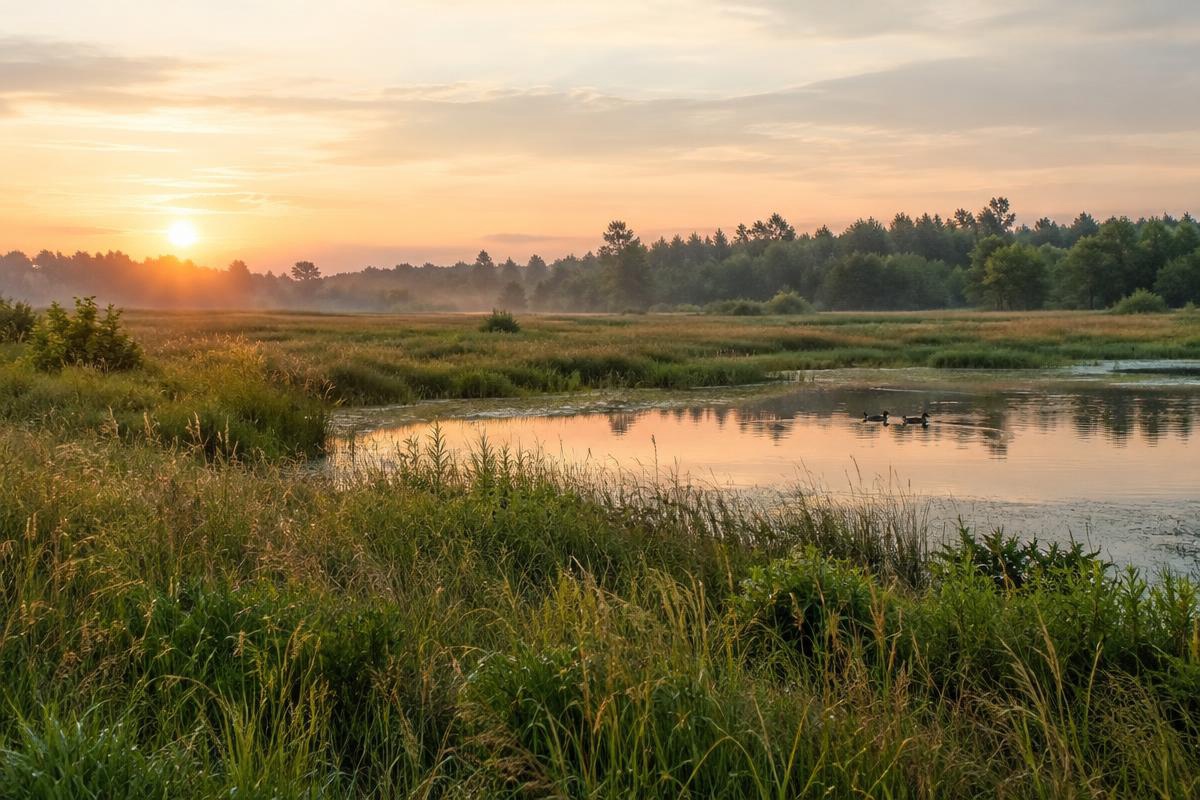
Restored wetland meadow at sunrise with waterfowl on a shallow pond
Getting started
The same habitat work can provide fisheries habitat, wildlife viewing habitat and even hunting habitat. While increasing wildlife value to a public area’s habitat, it doesn’t have to look drastically different. Of greatest importance is determining which of your habitat goals will best be served by your various options and which will best fit your site’s water, soil type, intended use and other constraints and goals.
Stream shade changes water and visibility
Most noticeable of the various strategies for improving habitat along a stream are those to provide stream shade. Trees and shrubs will cool exposed water and create attractive habitat for fish and other aquatic animals and provide cover where they can feel safe. These same plants, however, can also obscure view and hide activity of animals using the corridor.
New shrubs can make the bank harder to see from a path. That is one reason a casual visit can be misleading: a shaded stretch may give fish more cover while making surface activity less visible to people.
Native plants make the edge more useful
Native plants are particularly valuable along the edge of fields, the border of a woodland opening, or at the edge of a wet area. A diverse layer of grasses, flowering plants, shrubs, and saplings will generally be more effective than a single species stand. Note how the different plants provide cover at different heights. The area can become more productive for wildlife viewing over the seasons, and at times more difficult to walk through and view.
A visitor would note that areas of diverse habitat provide areas of increased wildlife observation throughout the seasons. Most sites have designated routes for visitors to follow in order to minimize the impact of visitors on newly planted habitat. Staying on routes and avoiding trampled areas of new growth are key to allowing these plants time to mature. In general, long pants, sturdy boots and a light outer layer of clothing will serve a visitor well. Even seemingly open areas of habitat can present problems for visitors.
Corridors connect places animals already use
Habitat corridors join together areas of habitat with features such as cover, water, food and shelter for different seasons. Corridors do not guarantee animals will be seen from a trail but they do facilitate animal movement between larger areas of usable habitat. A corridor such as a narrow wooded strip can be very valuable if it connects two good habitat areas rather than having to cross very disturbed habitat.
Habitat corridors to connect bigger areas of good quality habitat are more valuable than isolated patches of good quality habitat. Depending on the landscape, corridors can be very valuable where there are roads, fields and development that divide up habitats. Elsewhere, it is better to concentrate on improving the core habitat rather than just adding a corridor. However, wildlife observation and related activities are improved when people return to the same area quietly, following the same rules of access, and are able to notice other signs of wildlife than just the most obvious species.
Read a site beyond one visit
An empty bank does not mean that the planting of some shade is not successful, nor does one memorable occasion of spotting wildlife prove that a particular corridor worked to bring it there. You must go back to a site on several occasions and get a feel of what is going on.
Remember that habitat is best experienced over time. Return to the same site and under different conditions. Record your observations, whether it is the degree of water clarity, amount of new plant growth, recent animal tracks, bird sightings, degree of bank access or evidence of animal disturbance. Steer clear of recently restored areas and remember that closed routes are usually in place for good reason. Sound habitat work on public lands seeks to enhance wildlife habitats while maintaining safe and legal public access and allowing the landscape time to develop into a quality wildlife viewing corridor.
A note on regulations
Fishing and hunting rules are set by state and federal agencies and change annually. This article describes general outdoor practice, not current law. Confirm licenses, seasons, limits, and access with the managing agency before you go.